Willowpath
A plan for the year that follows
After a death, someone has to deal with the banks, the agencies and the paperwork, and it takes about a year. Willowpath is the map for that year, for the person holding it.
Coming to the App StoreComing to Google Play
Quiet, and in order
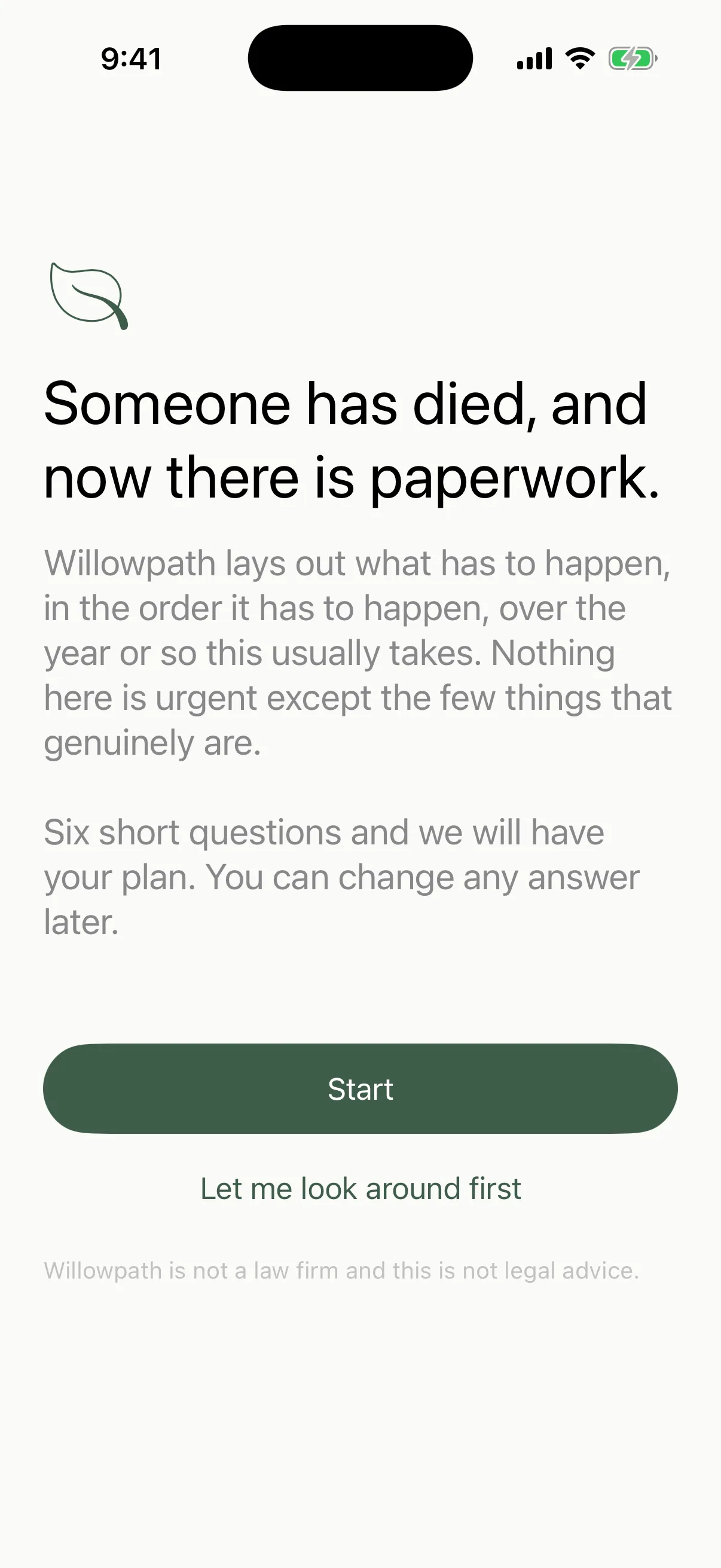
The first screen says what the app is for
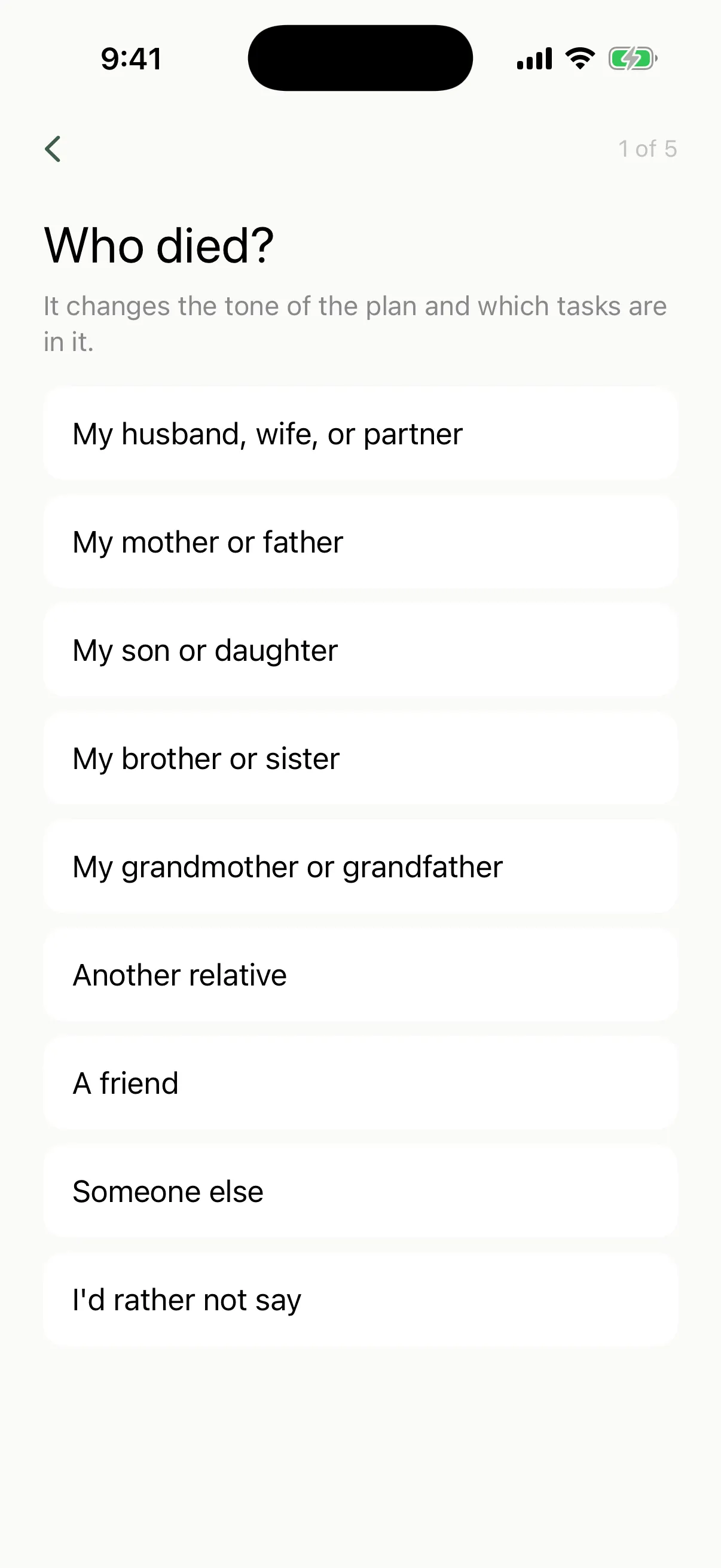
Five questions, and “I’d rather not say” is an answer
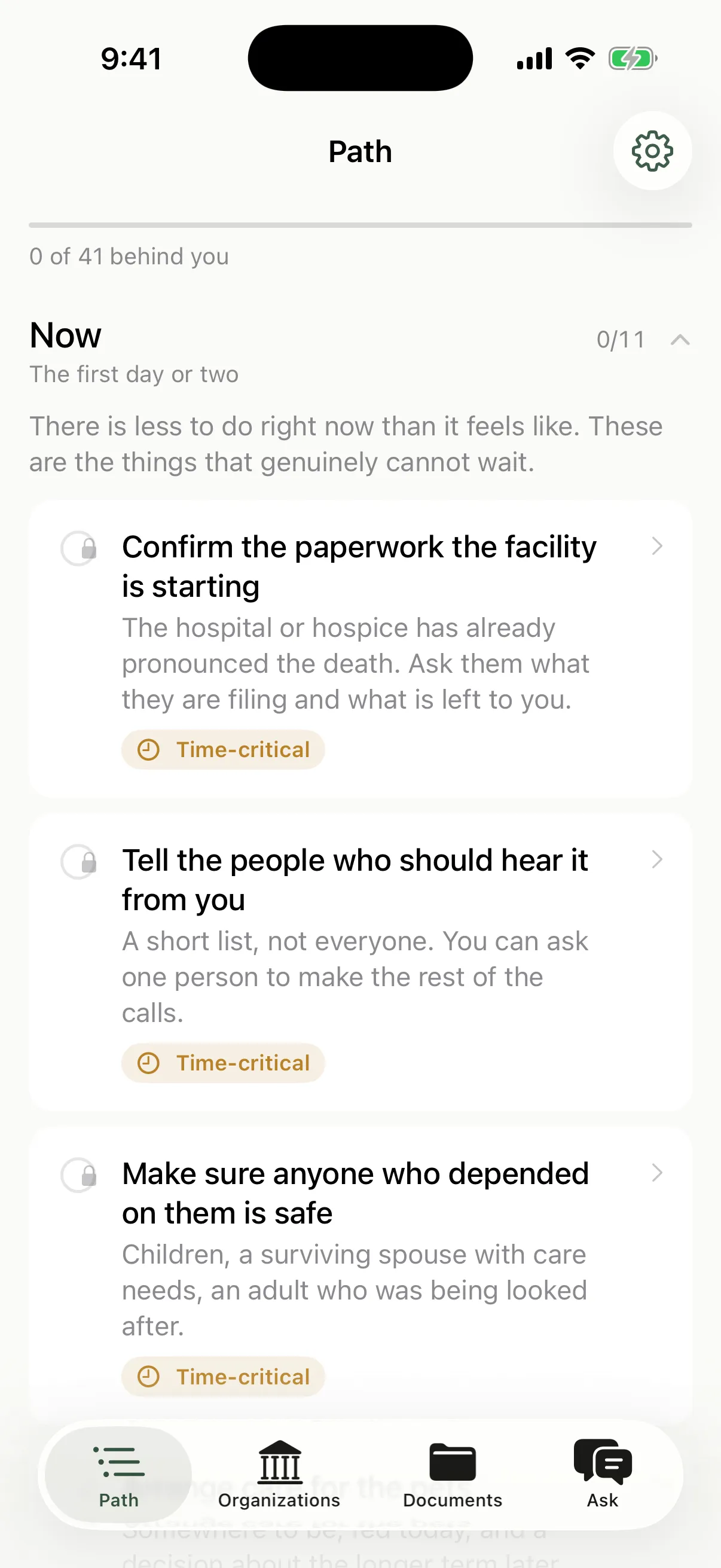
The current phase, open; the rest wait their turn
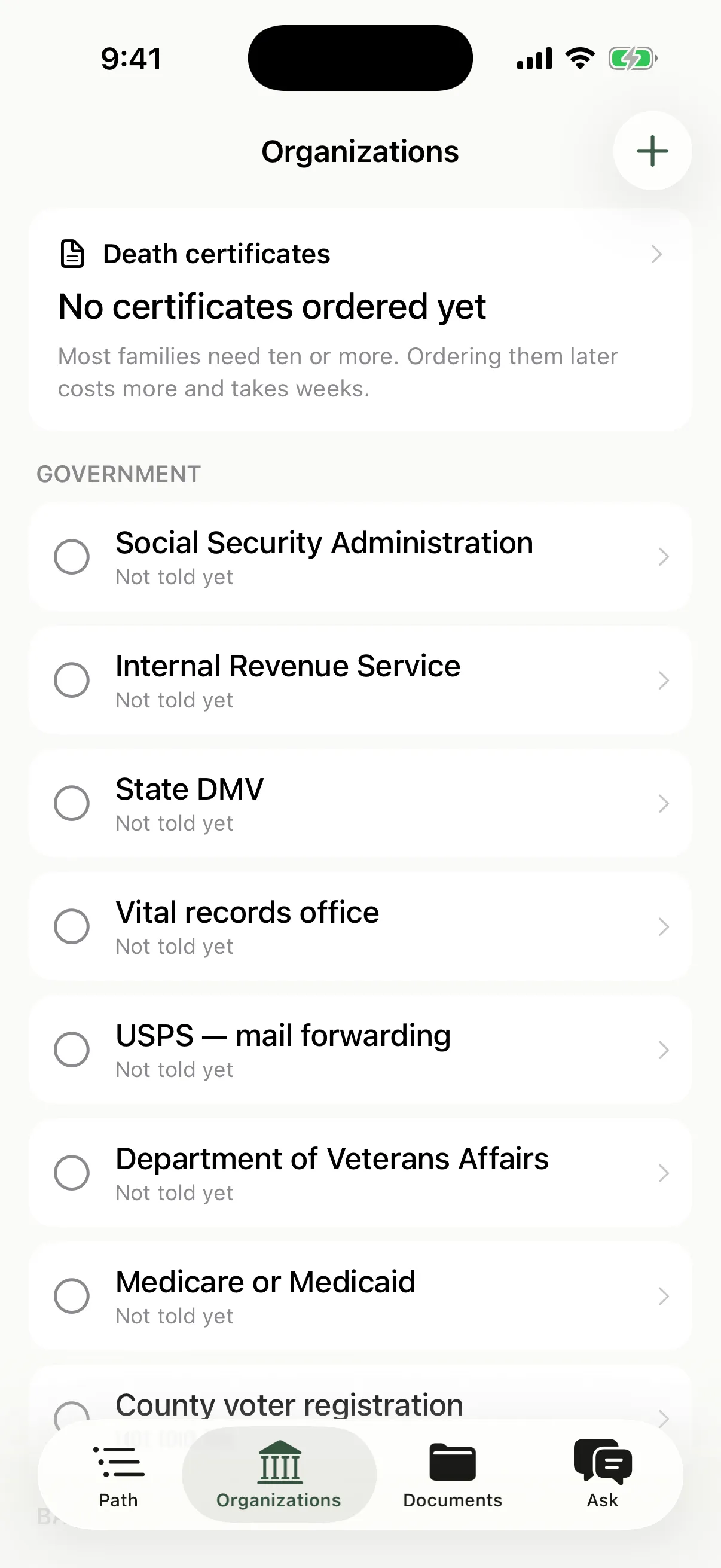
Who has been told, and how many certificates are left
Screens from the current build, shown with a sample case.
The list you did not know existed, in the order it has to happen
Fifty-four tasks sit behind the app; any one person's plan comes out between about thirty and fifty of them, because the branches — died at home or in hospital, there is a will or there might not be — are mutually exclusive. What you get is your list, not the whole category.
Five questions, then a plan
Your relationship to them, roughly when it happened, the state, whether there is a will and whether you are the executor, and where they were. “I’d rather not say” is an answer to the hard ones.
Five phases, in order
The first forty-eight hours, this week, this month, the coming months, and closing. The current phase is open; the rest wait. It starts where you actually are, not at the beginning.
Every task explains itself
Why it matters, the steps, the documents you will need, and the letter or phone script that goes with it. Mark it done, defer it, or say it does not apply.
Who has been told
A tracker for the banks, the pensions, the utilities, the agencies — forty-four presets — with a ledger of how many certified copies of the death certificate you have left.
Thirty-one letters, filled in
Your case details go into the template. A value you have not given becomes a visible blank like [their full name], never a quietly deleted sentence.
Ask, without giving up names
Questions answered from the same corpus the plan is built from, with an honest handover to an attorney when that is the right answer.
Nothing celebrates
No streaks, no confetti, no achievements, no percentage complete. Progress is a hairline and one sentence — “12 of 43 behind you”. Amber, never red, and only on the few things that are genuinely time-critical. You are not here to be encouraged; you are here to get through it.
A plan can include a task that turns out not to apply to you. It cannot hide one. Wherever the honest default is to show a task, it is shown — an extra task costs you one tap, a missing one costs a benefit nobody ever claims.
Preview everything, pay to work
Free
All of the information
- Your whole plan, every task in full
- Every letter, readable end to end
- The first few questions to Ask
One-time purchase
The tools
- Ticking tasks off and keeping progress
- The organization tracker and the copy ledger
- Letters filled in from your case
- Ask beyond the free questions, and the final report
Not a subscription, and nothing you are charged for is information. If reading something ever requires the purchase, that is a bug and not a pricing decision. The price is set per region and shown in the app before you buy.
Nobody’s name goes to the assistant
A question to Ask carries the question itself, the shape of the situation — the relationship, roughly when, the state, whether there is a will — and which tasks are in your plan. It does not carry your name, theirs, the dates, the address or a Social Security number. None of that would improve an answer about how probate works, and all of it is exactly what the app’s own fraud warning is about.
There is no sign-up. The Privacy Policy sets out what is stored and how to delete it.
Guidance, not a lawyer
Willowpath explains what usually has to happen and gives you the letters to do it. It is not legal, tax or financial advice, estates differ by state and by family, and some of them need an attorney. The app says so where it matters and hands over rather than guessing — see the Terms of Use.